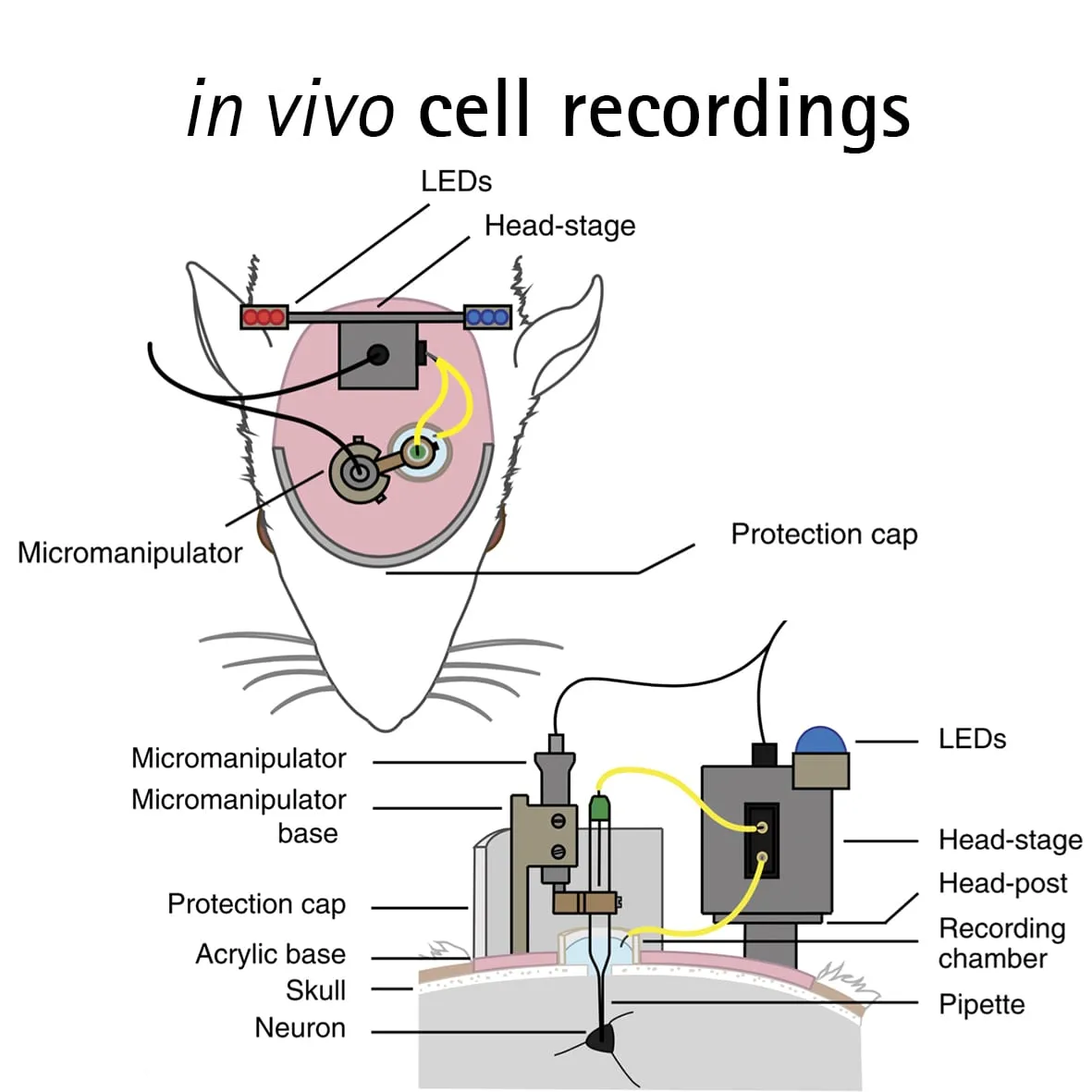
Intracellular recording demands such mechanical stability that it was long confined to in-vitro slices or head-immobilized animals. Reaching freely moving animals means shrinking the whole positioning system to something that can ride on the head without adding drift.
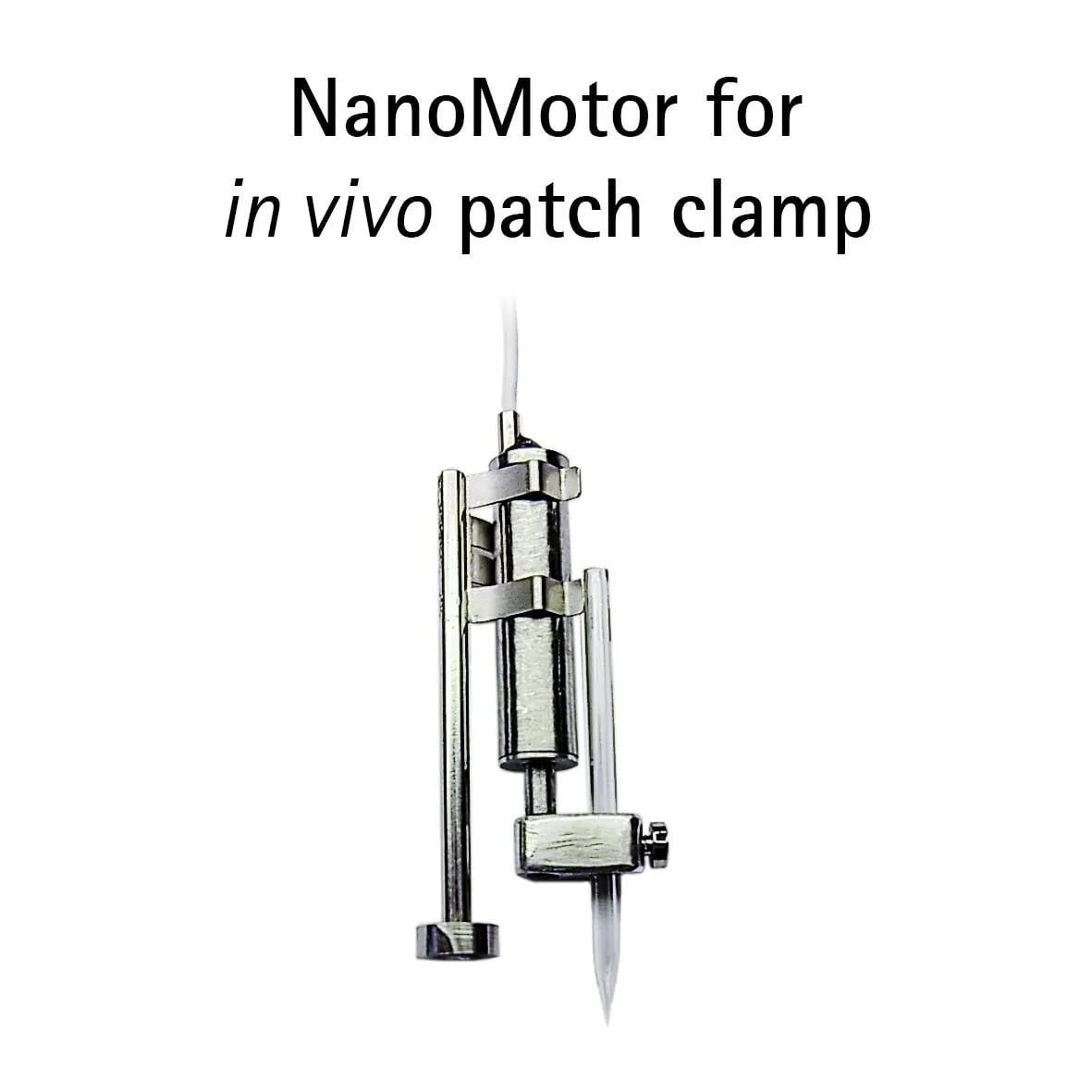
The single-axis in-vivo Nanomotor is built for this. At 16 mm long, 4 mm across and about 2 g, it advances the pipette with sub-nanometre resolution across an 8 mm range, then holds it rigidly on a moving animal.
The method has deep roots. In a landmark Neuron study, Lee, Manns, Sakmann and Brecht used an early Kleindiek Nanomotor, the NM2104 (21 mm long and 4 mm across), together with a lightweight pipette holder developed by Kleindiek, to make the first whole-cell recordings in freely moving rats, linking the activity of single, identified neurons to behaviour. Today’s in-vivo Nanomotor is smaller and lighter still.