
MM3A-LS
The MM3A micromanipulator configured for highly sensitive electrophysiology — long-term stability and sub-nanometre precision.
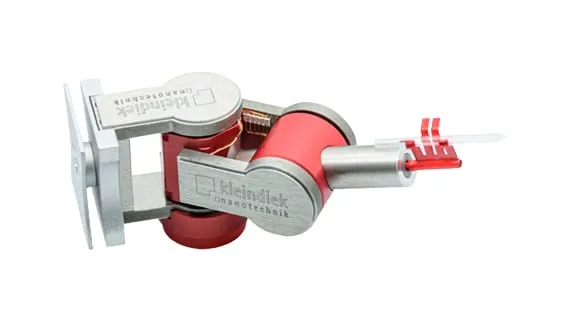
Built for a one-year endurance test#
The MM3A-LS is the MM3A micromanipulator configured for electrophysiology, where a recording can run for hours and the pipette cannot be allowed to drift. Kleindiek rates it for 1 nm/min of drift and backs the long-term stability claim with a full year of continuous endurance testing. The spherical Nanomotor® drive gives all three axes coarse approach and fine positioning without switching mechanisms: < 0.5 nm on axis A, < 0.25 nm on axis B, and below 0.05 nm on axis C, across a 100 cm³ working volume with no “blind axis” the way cartesian stages have.
Give your microscope a hand: use the MM3A-LS to add new capabilities and functionality to your instrument.
Magnetic, not bolted down#
At 45 g and mounted magnetically, the MM3A-LS goes onto and off a rig in seconds — useful when a bench carries two or more manipulators around a shared objective for dual-electrode patch clamp. The A and B axes move at up to 10 mm/s for rapid pipette approach, then hold at 3–4 Nmm of torque once positioned. It runs in ambient conditions up to 40% relative humidity, with a high-humidity version available for wetter environments; it is not vacuum compatible.
Gallery
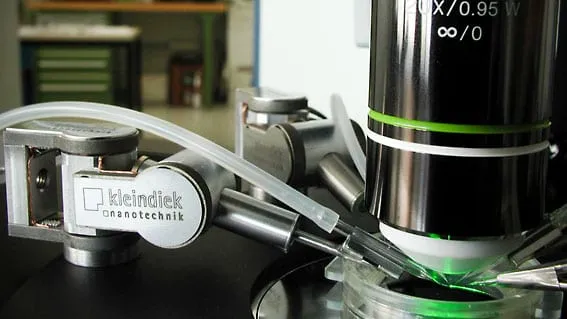
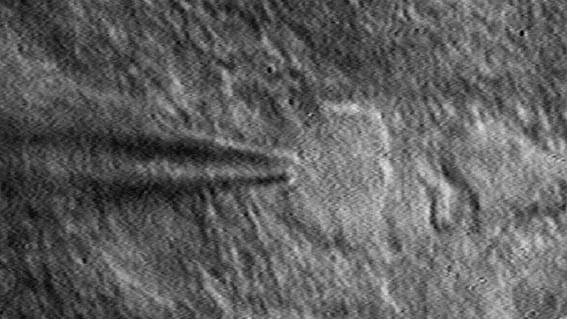
Paired manipulators closing in under epifluorescence. 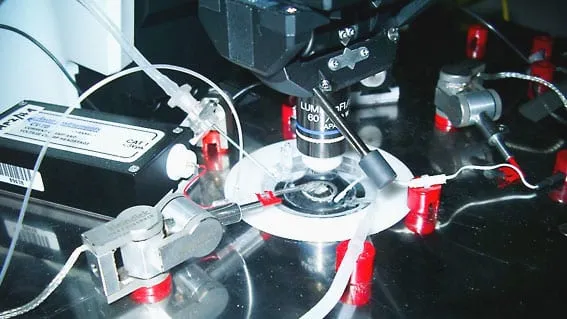
A dual-manipulator patch-clamp bench built around a 60x objective. 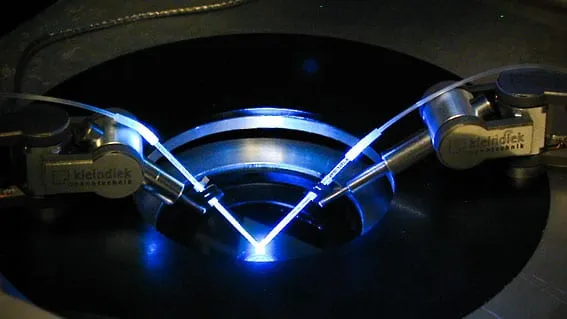
Two pipettes converging on a single cell. 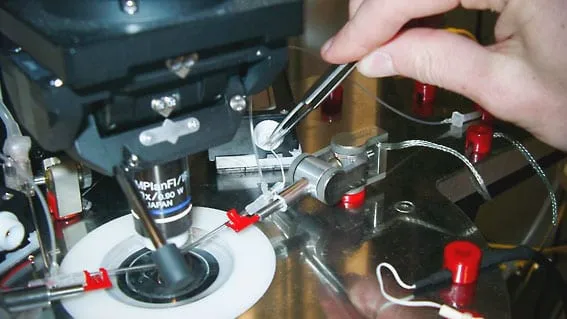
Tool-free pipette loading at the bench. 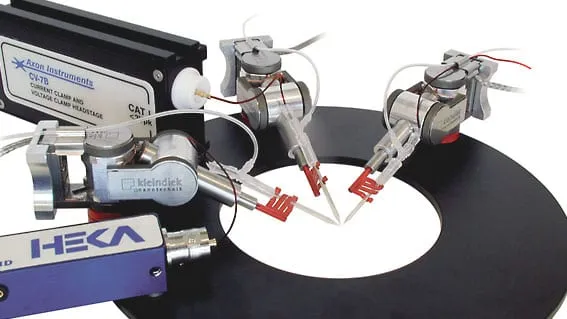
Wired to HEKA and Axon Instruments headstages for dual-electrode recording.
Technical data
Dimensions
- Length
- 62.1 mm
- Width
- 20.4 mm
- Height
- 25.4 mm
- Weight
- 45 g
Motion
- Range — A & B
- 240°
- Range — C
- 12 mm
- Speed — A & B
- up to 10 mm/s
- Speed — C
- up to 2 mm/s
- Holding force
- 1 N
- Holding torque
- 3 – 4 Nmm
- Lift — B
- 5 g
- Working volume
- 100 cm³
Resolution
- Axis A
- < 0.5 nm
- Axis B
- < 0.25 nm
- Axis C
- < 0.05 nm
Electrical & environment
- Probing current
- 10 nA – 100 mA
- Max. probing voltage
- 100 V
- Signal resistance
- 7.0 Ω
- Temperature range
- 273 K – 353 K
- Lowest pressure
- Not vacuum compatible
- Humidity
- max. 40% r.H.
- Mounting
- Magnetic
- Material
- Stainless steel, aluminium
See it run
Advantages
Built for electrophysiology
- A one-year endurance test backs the long-term stability claim
- Magnetic mounting for fast setup and removal between recordings
- Operates in ambient conditions up to 40% relative humidity
- High-humidity version available for wet-lab environments
Sub-nanometre precision
- Resolution of < 0.5 nm (A), < 0.25 nm (B) and < 0.05 nm (C)
- 100 cm³ working volume with no "blind axis" as in cartesian stages
- Drift held to 1 nm/min once the pipette is on target
- Coarse approach and fine positioning from the same drive
Fast, controllable motion
- Up to 10 mm/s on the A and B axes for rapid pipette approach
- 240° of rotation on A and B, 12 mm of travel on C
- Holding torque of 3–4 Nmm keeps the pipette put once positioned
- Drag-and-drop control software
Compact and stable
- Weighs just 45 g, including the pipette holder
- Compact construction pushes resonance frequencies higher than bulkier stages
- Fast hand pre-positioning before switching to motorized control
- Reduced electrical interference from the cabling design
What it’s used for
Related publications
A stomatin-domain protein essential for touch sensation in the mouse
DOI 10.1038/nature05394Mechanosensitive currents in the neurites of cultured mouse sensory neurones
DOI 10.1113/jphysiol.2006.117648Guard cells in albino leaf patches do not respond to photosynthetically active radiation, but are sensitive to blue light, CO2 and abscisic acid
DOI 10.1111/j.1365-3040.2006.01536.xA T-type calcium channel required for normal function of a mammalian mechanoreceptor
DOI 10.1038/nn1076Application articles
Electrophysiology with a Nanomotor®
What actually moves an electrode off a cell, and how the mechanics of a piezo drive keep it in place.
Probing mechanobiology
Two ways to define a mechanical stimulus, displacement and force, and why the choice shapes the experiment.
Evoking mechanically activated currents
The 'poke' assay: indenting a patch-clamped cell to open mechanically gated channels.
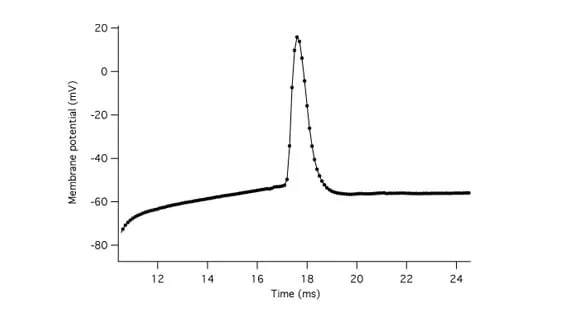
Patch-clamp positioning
Holding a patch pipette drift-free for the length of a recording.
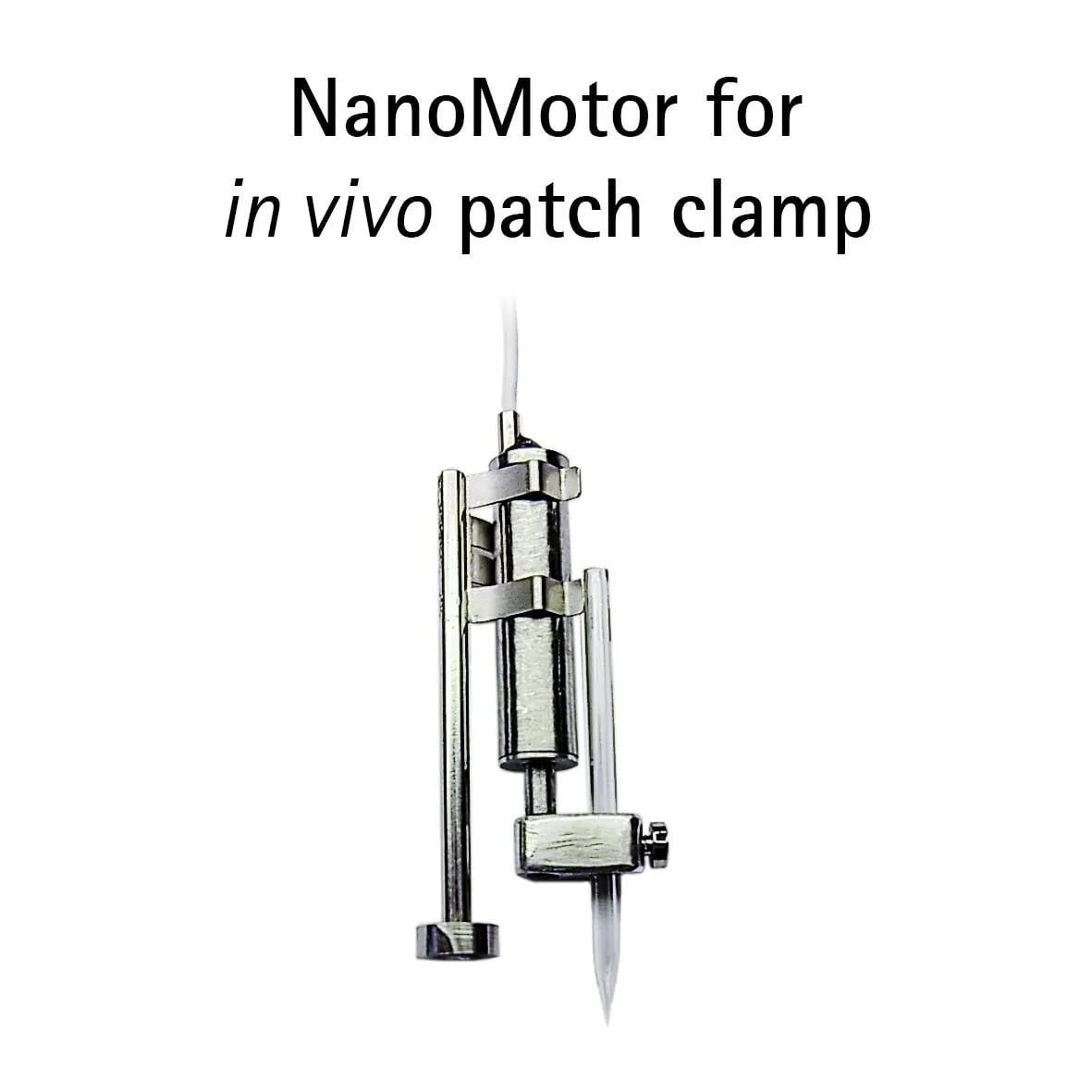
Patch clamp in freely moving animals
A head-mountable Nanomotor® that advances and anchors the pipette on a moving animal.
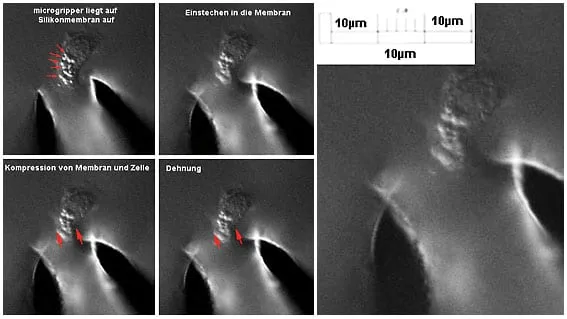
Stretching cells and tissue
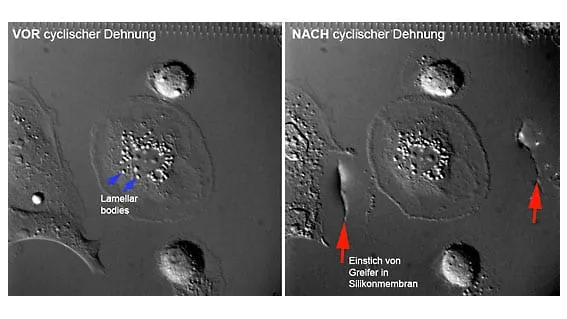
Applying stretch and defined force to cells on elastic substrates and to soft tissue.
Impaling plant cells
Microelectrode impalement of walled cells such as stomatal guard cells.
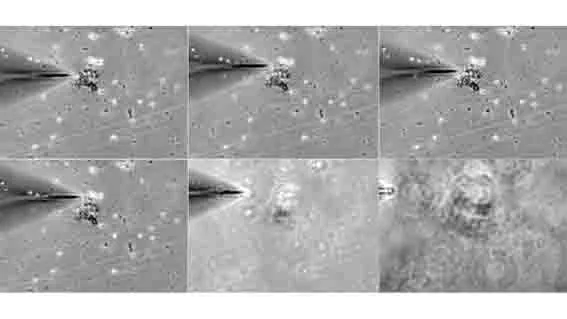
Microdissection
Cutting structures as fine as chromosomes with a sharp glass needle.
Mechanical stimulation in action
Cell stretch, mechanical stimulation and microdissection, filmed under the microscope.
Patch clamp in the lab
Recording setups and pipette handling, filmed at the bench.
Related products & accessories
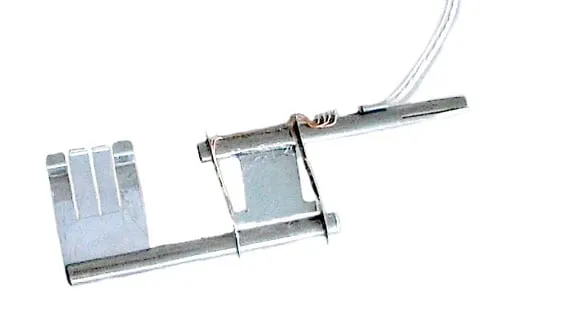
FMS-LS
A force transducer for life science — apply and record known forces (e.g. to skin samples) alongside patch-clamp recordings.
View product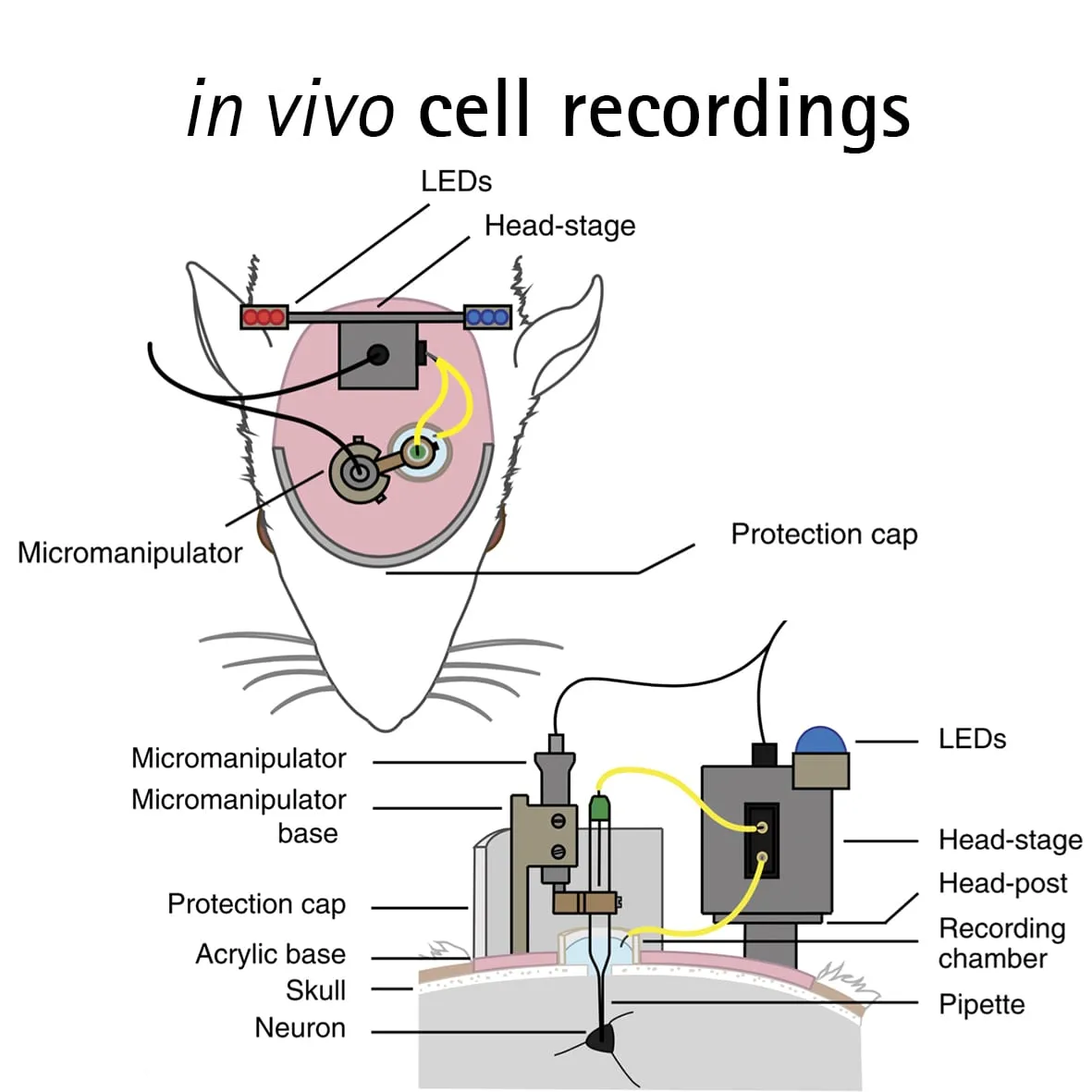
in vivo Nanomotor
A single-axis Nanomotor® light and rigid enough to ride on an animal's head — for patch-clamp recording in freely moving animals.
View productTalk to an application engineer
Tell us your sample and your microscope — we’ll walk you through the workflow and route you to the right regional team.