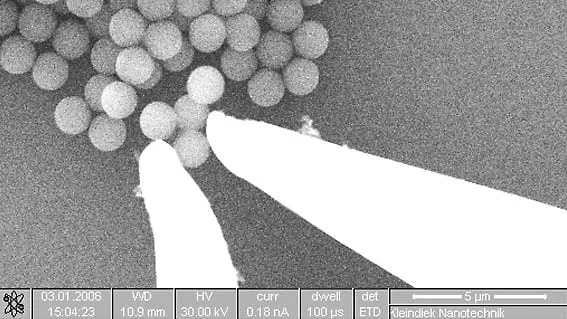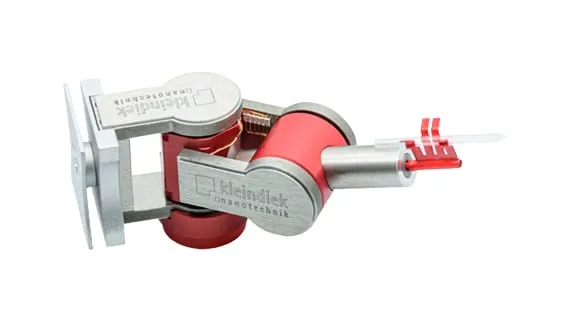
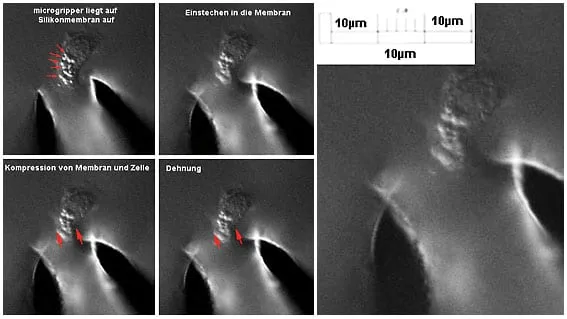
Some mechanobiology questions need stretch rather than a point indentation. At the University of Ulm, researchers grew living lung cells on an elastic membrane and used the arms of a microgripper to grip and stretch it, applying chosen amplitudes and frequencies while watching surfactant release with a fluorescent dye. A related experiment used the same approach to trigger and image a calcium wave spreading across a lung epithelial cell after stimulation.
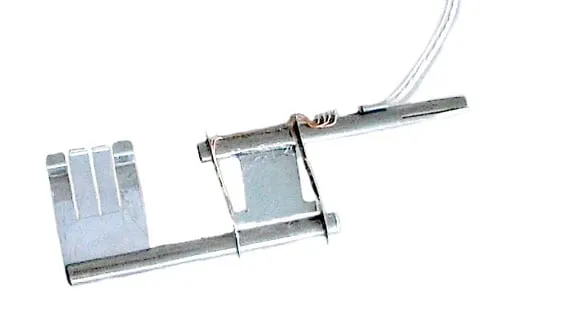
Where a quantified force is needed rather than a displacement, the FMS-LS force transducer can be fitted with a glass capillary to apply and record a known force — for example pressing on a skin sample while a patch-clamp setup records the nerve response. Both approaches rest on the same requirement: stable, programmable, precisely controlled motion.