A stimulus you can repeat, cell to cell#
Mechanobiology asks how a cell turns a physical force into a biological signal. Answering that means being on both sides of the event at once: applying a stimulus you can quantify and repeat, to a target only a few micrometres across, while reading the cell’s response in real time, usually by patch clamp or fluorescence. A stimulus that cannot be reproduced cannot be compared from cell to cell, so control over the mechanics counts as much as the recording does.
Displacement or force#
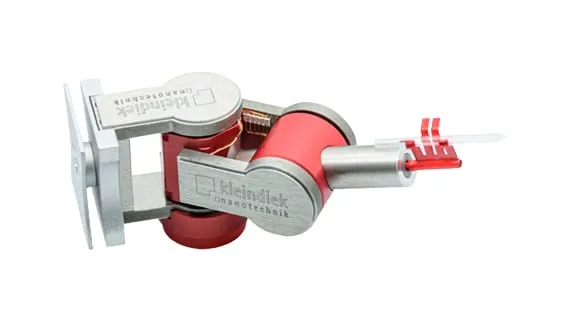
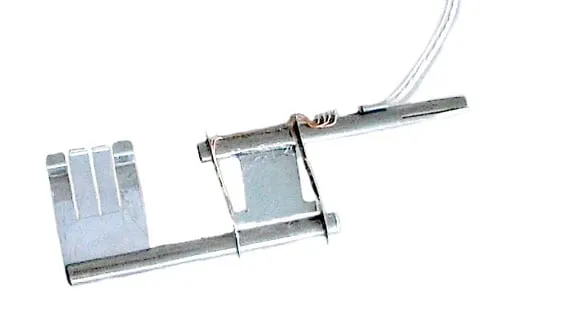
There are two ways to define the stimulus, and they call for different tools. Under displacement control, the manipulator drives a glass probe a set distance into the membrane at a set velocity; because the Nanomotor® moves in sub-micron steps, that distance repeats cell to cell, and the velocity (around 1 µm/ms) matters in its own right, since mechanically activated channels respond to how fast they are deformed and not only how far. Under force control, the FMS-LS transducer reports the force it is applying, so the stimulus is set and read in units of force rather than distance, the natural frame for stretching tissue or a whole cell.
Stimulus and response together#
Whichever mode is used, the mechanical channel runs alongside the electrical or optical readout, so the stimulus and the response it evokes share one timebase and can be lined up directly. The pages that follow take each method in turn: evoking mechanically activated currents, stretching cells and tissue, and microdissection.