Two contacts divide the injected current#
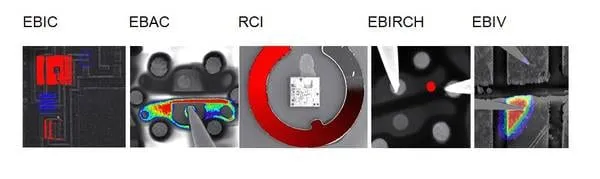
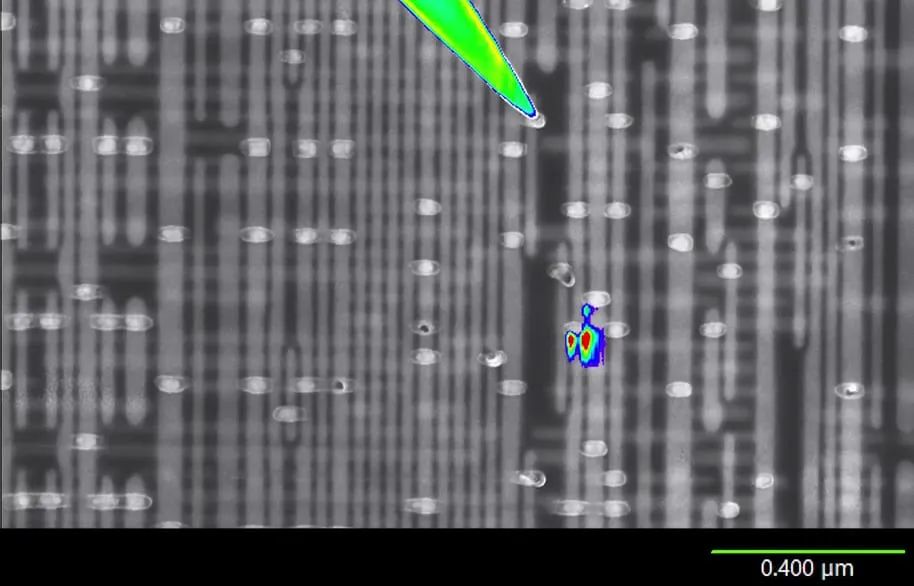
Resistive Contrast Imaging is the two-contact relative of EBAC. Two probes contact a conductor at different points; as the electron beam injects current at each scan position, that current divides between the two contacts according to the resistance on either side. The image contrast therefore encodes the resistance distribution along the net, and an open or a high-resistance segment changes the contrast sharply right where it sits.
Two probes into one amplifier#
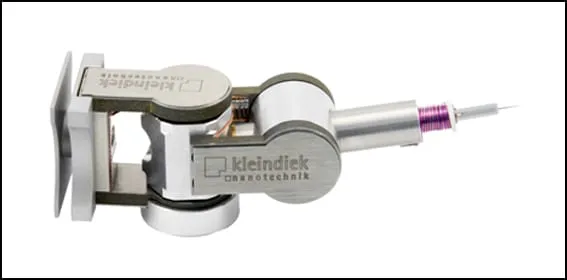
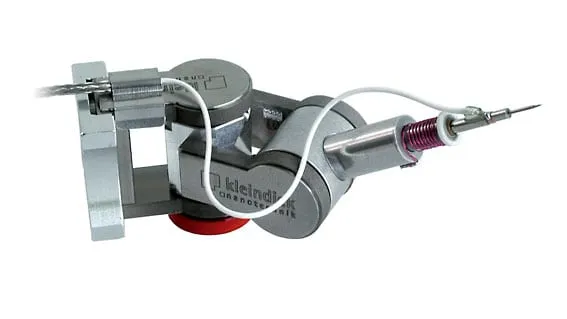
Two manipulator probes (for example MM3A-EM arms fitted with the LCMK-EM low-current kit, or two Prober Shuttle probes) contact the structure, and both signals are read by the EBIC amplifier and mapped onto the secondary-electron image.
Which side of the contact the fault lies on#
Pinpointing opens and resistive defects along interconnects and via chains, and telling which side of a contact a fault lies on, complementing EBAC when a single-contact map is ambiguous.